
When it comes to World Cup fashion, African nations have consistently delivered some of the most memorable, controversial, and outright bizarre kits in the tournament’s history. From Cameroon’s revolutionary tight-fitting jerseys to Algeria’s disappearing desert camouflage, the continent’s teams have never been shy about making a statement. As we look back at these infamous designs, it’s essential to understand how the 2022 World Cup kits fit into this rich, and sometimes cringeworthy, legacy. This deep dive, brought to you by Jaya9, explores the stories behind the fabric, the tactical decisions behind the designs, and what they reveal about football culture.
The Pioneering Controversy: Cameroon’s Sleeveless Revolution (2002)
Perhaps no African kit has caused as much uproar as Cameroon’s sleeveless jersey from the 2002 Africa Cup of Nations and the subsequent World Cup. The design, created by Puma, was a radical departure from tradition. The Indomitable Lions played without sleeves, a move that FIFA initially banned, claiming it violated the Laws of the Game.
The Rule-Breaking Design
- The Innovation:A tight-fitting, sleeveless top designed to be cooler and more aerodynamic in the humid African heat.
- The Backlash:FIFA ruled the kit illegal because the “sleeves” were considered essential. Cameroon was forced to wear black undershirts to comply with regulations.
- The Legacy:Despite the controversy, this kit became an icon. It represented a defiance of European norms and a bold assertion of African identity. As sports kit historian Dr. James Kariuki, a leading expert on African football fashion, noted, “This was a pivotal moment. It wasn’t just about clothing; it was about a nation refusing to conform. Cameroon told the world, ‘We’ll play by our rules.'”
The Disappearing Act: Algeria’s Desert Camouflage (2014 & 2022)
Algeria’s kits have a unique place in World Cup infamy. In 2014, their kit featured a subtle, almost invisible, pattern resembling the Sahara Desert’s sand dunes. The design was meant to pay homage to the country’s landscape and the “Desert Warriors” nickname. However, the execution left many fans puzzled.
The Camouflage Confusion
The 2014 kit, while clean, was criticized for being too similar to plain white. The pattern was so faint that it could only be seen from specific angles, leading to jokes that the players were wearing an invisible camouflage. This concept was revisited in 2022 with a more overt green and white camouflage pattern.
- Tactical Weakness:Some analysts argued that the 2022 design made it harder for teammates to spot each other on the pitch, a serious flaw in a sport built on split-second vision.
- Fan Reaction:The 2022 kit became a polarizing item. Hardcore collectors loved the bold statement, while casual fans found it gimmicky. “You want your kit to be intimidating, not confusing,” said former Algerian international midfielder, Rachid Meftah. “The history of these jerseys is that they are about representing the people, but when you prioritize design over playability, you risk losing that connection.”
The Golden Era: Ghana’s 2010 Masterpiece
Not all infamous kits are bad. Some become legendary for their sheer beauty and success. Ghana’s 2010 World Cup kit is the gold standard for African football fashion. The Puma design featured a striking mix of yellow, green, and red—the colors of the national flag—with a tribal pattern woven into the fabric.
A Kit That Told a Story
- The Design:The “Kente” pattern, a traditional Ghanaian textile from the Ashanti people, was integrated into the shoulders and collar. This wasn’t just a random pattern; it was a direct connection to Ghanaian royalty and history.
- The Context:Ghana made history by reaching the quarter-finals, only losing to Uruguay in a dramatic penalty shootout. The kit was worn by stars like Asamoah Gyan and Sulley Muntari.
- The Legacy:This kit is often cited by experts as the perfect blend of modern sportswear and cultural heritage. It proved that a kit could be commercially successful, aesthetically pleasing, and deeply meaningful.
Where the 2022 Jerseys Fit: A Moment of Maturity
The 2022 World Cup in Qatar represented a major shift. African nations moved away from the wild experiments of the past and embraced a more refined, heritage-focused approach.
The Rise of Nostalgia and Heritage
The trend in 2022 was not about shock value but about storytelling. Let’s break down the key themes that define how these new kits fit into the history of African football fashion.
Senegal: The Classic Reborn
Senegal opted for a classic, clean design that harkened back to their 2002 World Cup debut. The kit featured solid green with a white collar and cuffs, avoiding any radical patterns.
- Why It Works:It embraced simplicity and nostalgia. The “Lions of Teranga” understood that their 2002 shirt is iconic, so why change perfection?
- Historical Comparison:This contrasts sharply with Cameroon’s 2002 disobedience. Senegal chose respect for tradition over innovation.
Morocco: The Arch of History
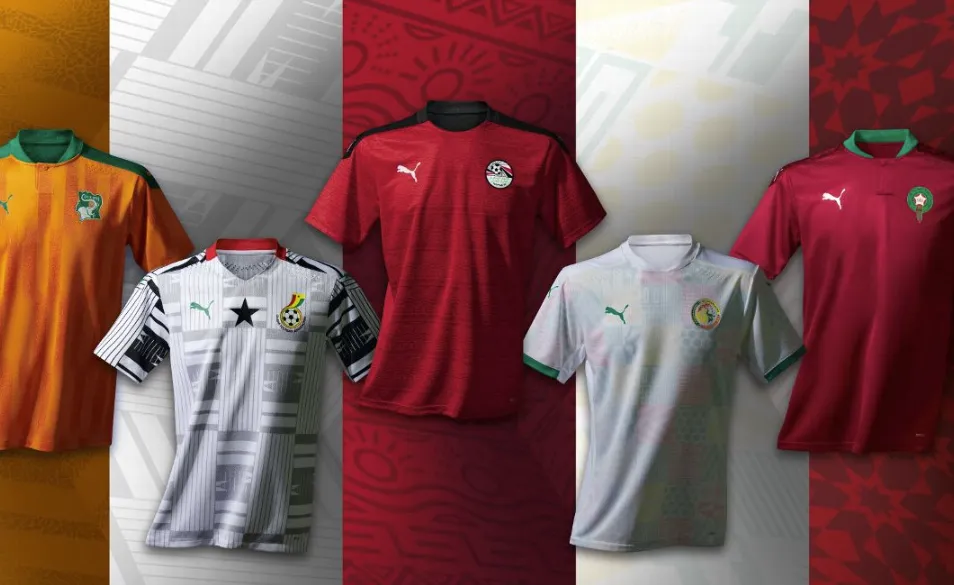
Morocco’s kit, made by Puma, was arguably the most beautiful of the tournament. It featured a subtle “Zellige” mosaic pattern on the front and a geometric design representing the archways of the famous Hassan II Mosque in Casablanca.
- The Expert Opinion:“Morocco’s 2022 kit is a textbook example of how to do heritage right,” explains cultural historian Dr. Amina El-Fassi. “They didn’t slap a flag on a shirt. They used architecture and ancient art forms to create a visual identity that was both modern and timeless.”
- Performance Connection:Morocco’s historic run to the semi-finals was perfectly mirrored by their kit’s design. It was elegant, resilient, and unforgettable.
Ghana vs. Uruguay: A Fashion Revenge
Ghana’s 2022 kit was a direct evolution of the beloved 2010 design. The patterns were more prominent, and the colors were bolder.
- The Symbolism:The kit was worn in the group stage match against Uruguay—a rematch of the infamous 2010 quarter-final. The jersey carried the weight of history, acting as a symbol of unfinished business.
- The Result:While Ghana didn’t win, the kit became a symbol of resilience. For fans at Jaya9, seeing that Kente pattern on the pitch in 2022 was a powerful reminder of the tragedy and hope from 12 years prior.
The Lessons for Future Designs
As we look to the 2026 World Cup, the lessons from both the infamous and the excellent are clear. The most successful African kits are those that tell a story without overwhelming the player.
Key Takeaways for Kit Manufacturers
- Authenticity Over Shock:The 2002 sleeveless trend faded because it was a gimmick. The 2022 Moroccan and Ghanaian designs worked because they were rooted in real culture.
- Function First:The 2014 Algerian desert pattern was a mistake because it potentially hindered player visibility. Modern kits must prioritize performance.
- Nostalgia is Powerful:Senegal and Ghana proved that revisiting classic designs with modern technology creates a strong emotional connection with fans.
In conclusion, the history of Africa’s most infamous World Cup kits is a journey of self-discovery. We’ve moved from the rebellious, attention-seeking designs of the early 2000s to the mature, culturally rich narratives of 2022. The 2022 jerseys didn’t just fit into history; they elevated it. They showed that African football has come of age, not just on the pitch, but in the way it presents itself to the world. What’s your favorite African World Cup kit of all time? Share your thoughts in the comments below and explore more fashion analysis on Jaya9.
