

The FIFA World Cup is the pinnacle of international football, and the journey to qualify for the tournament is often just as dramatic and unpredictable as the finals themselves. Understanding how qualifying works can be complex, with different rules across continents and changing formats. This guide from Jaya9 breaks down the entire process, explaining everything from the number of spots allocated per continent to the unique regulations that can see teams advance, or be eliminated, in the most thrilling of circumstances.
The Foundation: Allocation of Spots
The first and most critical step in any World Cup qualifying cycle is determining how many teams from each continent will get to participate. This allocation is based on the strength of the confederations, which is assessed using past World Cup performances and current FIFA rankings. For the 2026 World Cup, which will be expanded to 48 teams, the allocation was significantly reshuffled to give more opportunities to teams from Africa, Asia, and North America.
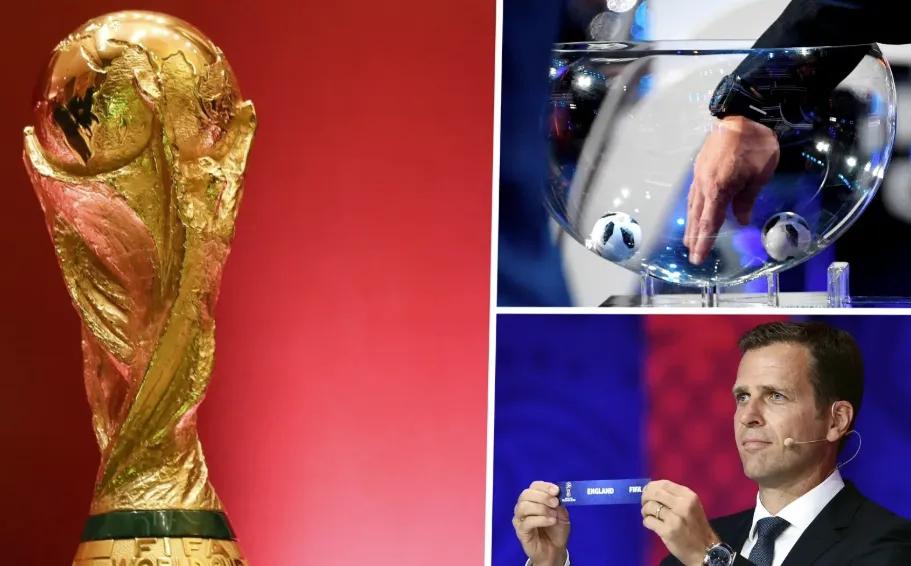
Confederal Qualifying Spots for 2026
The host nations, the United States, Canada, and Mexico, automatically qualify, along with the host of the tournament, though this is typically just one country. For the expanded format, the distribution is as follows:
- AFC (Asia):8 direct spots
- CAF (Africa):9 direct spots
- CONCACAF (North and Central America):6 direct spots (plus the 3 hosts)
- CONMEBOL (South America):6 direct spots
- OFC (Oceania):1 direct spot
- UEFA (Europe):16 direct spots
In addition to the direct qualifying spots, there are also intercontinental playoffs that create two additional slots. This is where teams from different confederations face off for a last chance to secure a place in the World Cup.
How Each Confederation Conducts Its Qualifying
Each of the six confederations runs its own unique qualifying tournament, with formats designed to fit its number of member associations, geography, and competitive balance. This is where the real drama unfolds, as teams navigate group stages, knockout rounds, and sometimes even mini-tournaments.
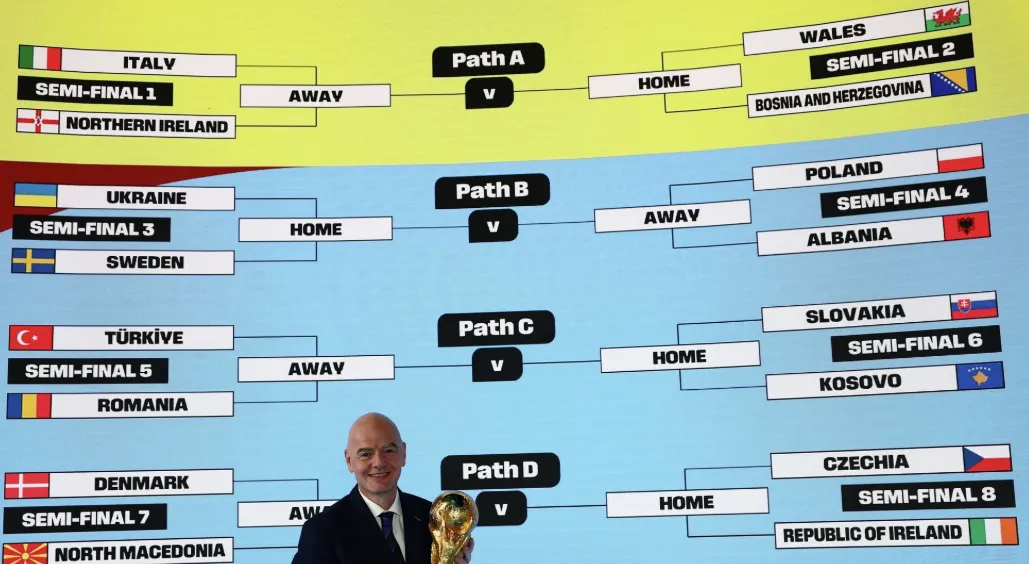
UEFA (Europe): The Most Competitive Path
UEFA, being the largest confederation in terms of quality and depth, has the most direct spots. The process is a mix of a group stage and playoffs.
- Group Stage:55 UEFA nations are drawn into 10 groups of 5 or 6 teams. Each team plays a home-and-away round robin. The 10 group winners qualify directly for the World Cup.
- Playoffs:The 10 group runners-up are joined by the two best Nations League group winners (that haven’t qualified directly). These 12 teams are drawn into three playoff paths. Each path features a semi-final and a final, all single-leg knockout matches. The three winners from these paths join the 10 group winners.
This system ensures that even a team that narrowly misses the top spot in its group still has a strong chance of making it through the playoffs, making the competition incredibly intense until the very last match.
CONMEBOL (South America): A Marathon of Endurance
South America’s qualifying is famously the most grueling and fair due to its unique format.
- Single League:All 10 CONMEBOL teams play in a single, massive league table. They play each other twice (home and away), for a total of 18 matches.
- Direct Qualifiers:The top 6 teams automatically qualify for the World Cup.
- Playoff Spot:The 7th-placed team earns a spot in the intercontinental playoff.
This format is considered the ultimate test of consistency, as teams must perform at a high level over a period of nearly two years, traveling to every altitude, climate, and venue on the continent.
CAF (Africa): The Rise of the New Format
Africa’s qualifying process has undergone a major change for the 2026 cycle, aiming to reduce the number of shocks and reward the strongest teams more consistently.
- Group Stage:54 African teams are drawn into 9 groups of 6 teams. They play a home-and-away round robin.
- Direct Qualifiers:The 9 group winners qualify directly for the World Cup.
- Playoffs:The 9 group runners-up are ranked based on their results, and the top 4 are placed in a playoff bracket. The winner of this playoff earns a spot in the intercontinental playoff.
This new format ensures that the best-performing runners-up have a chance, but only the group winners are guaranteed a place in the finals.
AFC (Asia): The Final Hurdle
The Asian Football Confederation uses a multi-stage qualifying process to filter its large number of members down to the final qualifiers.
- First Two Rounds:The lowest-ranked teams play in early knockout rounds to reduce the field.
- Third Round:The remaining 18 teams are drawn into 3 groups of 6. The top 2 from each group (6 teams) qualify directly for the World Cup.
- Fourth Round:The 3rd and 4th-placed teams from each group (9 teams) are split into two groups of 4. The two group winners of this round qualify directly, making it a total of 8 direct spots.
- Fifth Round:The two group runners-up face each other in a single-playoff match. The winner of that match earns a spot in the intercontinental playoff.
This complex structure gives teams that fail in the third round a second life, ensuring that the best two teams from the fourth round still get a chance.
CONCACAF (North and Central America): The Path to the Hex
With the inclusion of three host nations (USA, Canada, Mexico), the path for other CONCACAF teams has been modified.
- First Two Rounds:Lower-ranked teams first compete in a mini-tournament to reduce the field.
- Third Round:The remaining teams are drawn into groups to reduce the field to 12 teams.
- Fourth Round:The 12 teams are split into 2 groups of 6. The top 3 from each group (6 teams) qualify for the World Cup.
- Playoffs:The 4th and 5th-placed teams from each group enter a playoff bracket. The winner of this bracket earns a spot in the intercontinental playoff.
This structure ensures that teams from the Caribbean, Central America, and North America all have a clear path, with the top half of the region automatically qualifying.
The Intercontinental Playoffs: The Final Battle
This is the ultimate escape route for teams that just missed out on automatic qualification. The intercontinental playoffs involve six teams from five confederations, competing for the last two spots in the World Cup.
- Participants:One team each from AFC, CAF, CONCACAF, and CONMEBOL, plus two teams from OFC (Oceania).
- Format:The six teams are drawn into two separate playoff brackets. Each bracket features a semi-final and a final, all single-leg matches, usually played at a neutral venue.
- Winners:The two bracket winners earn the final two spots in the World Cup.
This format has produced some of the most memorable matches in World Cup history, as it’s win-or-go-home, with no second chances.
Key Factors Influencing Qualification
A team’s success in qualifying doesn’t just depend on talent; several factors can make or break its campaign.
- Home Advantage:Playing at high altitude (e.g., La Paz, Bolivia) or in difficult climates gives home teams a massive edge, as opponents must adapt to conditions they rarely face.
- Squad Depth:Teams with a deep bench can rotate players during busy fixture schedules, while those with a smaller pool often struggle when key players are injured or suspended.
- Nations League:The UEFA Nations League now plays a crucial role, as it offers the best non-qualified group winners a backup path to the playoffs, adding another layer of strategy.
- Momentum:A team on a long winning streak carries immense confidence, while a team struggling to score goals can see its morale collapse, even if it still has a mathematical chance.
Conclusion Jaya9‘s Final Analysis
World Cup qualifying is a marathon, not a sprint. It is a test of tactical flexibility, mental resilience, and roster depth. As we look ahead to the next cycle, the drama is already building. Will a traditional powerhouse miss out? Will a dark horse from Africa or Asia finally break through and make history? Only time will tell, but one thing is certain: the journey to the World Cup is often more exciting than the tournament itself. For the most in-depth analysis and up-to-the-minute coverage of every qualifying match, Jaya9 remains your ultimate source for football expertise.
We encourage you to share your thoughts in the comments below. Which team do you think will be the biggest surprise qualifier for the next World Cup? Don’t forget to explore more of our articles for expert breakdowns on the beautiful game!
