
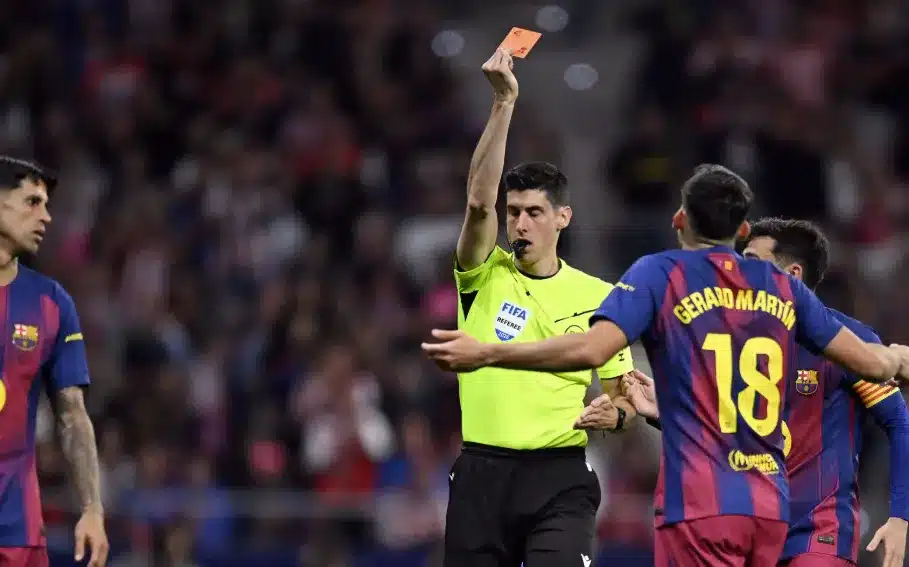
The world of Spanish football has once again found itself at the center of a VAR controversy, this time involving Barcelona‘s promising left-back Gerard Martin. A recent incident during a La Liga fixture has raised serious questions about the consistency and accuracy of video assistant referee decisions, leaving fans, players, and pundits scratching their heads in disbelief. As the debate intensifies, we delve deep into the incident, its implications, and what this means for the future of officiating in Spain’s top flight.
The Incident Unfolds: What Actually Happened?
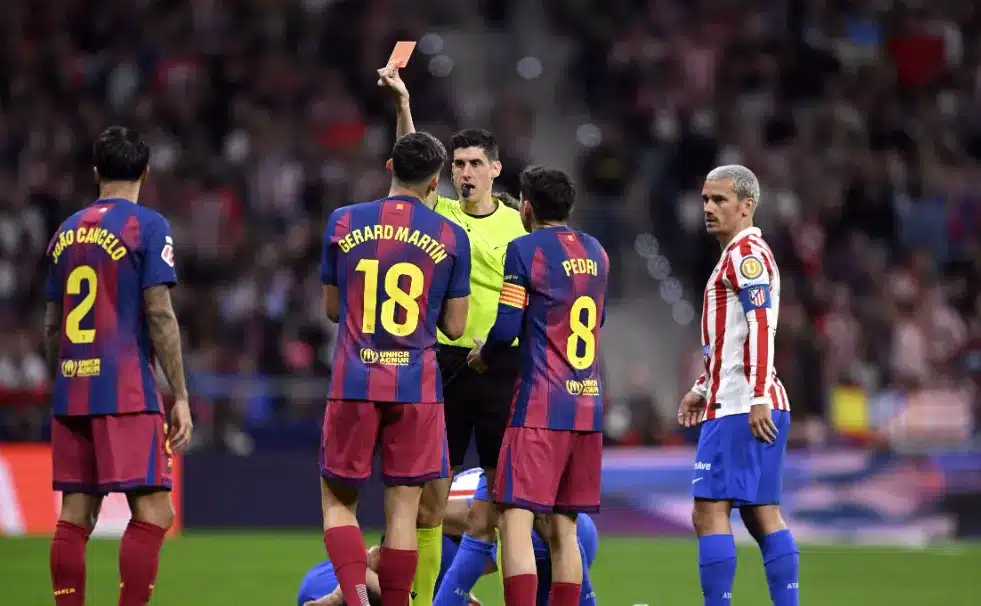
During a tightly contested La Liga match, Barcelona‘s Gerard Martin was shown a yellow card for a challenge that, upon closer inspection, appeared to warrant a much harsher punishment. The incident occurred in the first half when Martin, attempting to regain possession, made a late tackle on an opposing player that caught the attacker’s ankle. The referee, positioned with a clear view, initially decided on a yellow card, but the real controversy began when the VAR team intervened.

The VAR Review Process
According to Spanish football officials, the VAR team did review the incident, but here’s where the story takes a puzzling turn. Despite the tackle appearing to meet the criteria for a red card—excessive force, endangering the safety of an opponent, and a lack of intent to play the ball—the decision to uphold the yellow card was made. Official statements later confirmed that a “clear and obvious error” had occurred, but the VAR protocol was not fully applied in this instance.
“This was a defining moment for how we view VAR’s role in the game,” commented Juan Carlos Perez, a former La Liga referee now working as a football analyst. “The technology is there to correct clear mistakes, and yet, in a situation that many would argue was a textbook red card offense, the system failed. This isn’t just about one decision; it’s about the integrity of the competition.”
Why This Decision Matters Beyond One Match
The Gerard Martin yellow card incident isn’t just a one-off mistake. It highlights deeper, systemic issues within the VAR implementation in La Liga, issues that have been simmering for some time.
Inconsistency in Decision Making
One of the most significant concerns that arises from this controversy is the lack of consistency in VAR interventions. Throughout the season, we have seen tackles with similar levels of force result in red cards, while others, like Martin’s, are somehow deemed only worthy of a yellow. This inconsistency creates confusion not just for players and managers, but for the millions of fans watching the game. When the rules of the game are applied differently from one matchday to the next, it undermines the very foundation of fair competition.
The Human Element vs. Technological Precision
The incident also reignites the debate about the balance between the human element of refereeing and the precision offered by technology. VAR was introduced to eliminate “clear and obvious errors,” but the subjective interpretation of what constitutes such an error remains. Was the Martin challenge a clear and obvious red card? Many say yes. The Spanish officials’ admission of a mistake suggests they agree. So, why wasn’t the on-field decision overturned?
Maria Gonzalez, a seasoned sports journalist and tactical analyst, shared her insight on the matter, stating: “The problem isn’t the technology itself. The camera angles are clear, the replays are available. The problem is the human judgment involved in deciding when and how to use that technology. We have highly trained officials in the VAR room, but if they are hesitant to overrule a colleague on the field, or if the threshold for intervention is set too high, then the entire purpose of VAR is compromised. This incident with Martin is a perfect example of that dysfunction.”
The Fallout: Reactions from the Football Community
The aftermath of the decision has been swift and pointed. Barcelona fans feel hard done by, not because they believe their player should have been sent off, but because the inconsistency puts their team at a potential disadvantage in future matches where similar challenges might be punished more severely. On the other hand, opponents and rival fans point to this as another example of perceived favoritism or incompetence from the officiating bodies.
Impact on Barcelona’s Tactical Setup
From a tactical perspective, had Gerard Martin been sent off with a red card, it would have drastically altered Barcelona‘s game plan. The team would have been forced to play with ten men for the majority of the match, potentially leading to a defensive reshuffle and a more conservative approach. This hypothetical scenario underscores how a single, flawed decision can have a cascading effect on the outcome of a game and, by extension, the title race.
The Official Acknowledgment: A Hollow Victory?
The admission by Spanish football officials that a mistake was made is a rare and noteworthy event. However, for many, this acknowledgment rings hollow. It does nothing to change the result of the match, nor does it compensate for the potential damage done to the integrity of the competition. “An apology or an admission of fault after the fact is meaningless,” says former player and current football analyst, Pablo Martinez. “What matters is the decision in the moment. By admitting the error, the officials are essentially admitting that the system they are supposed to manage is broken. This doesn’t instill confidence; it erodes it further.”
Looking Ahead: What Reforms Are Needed?
The Gerard Martin yellow card fiasco should serve as a catalyst for meaningful reform in how VAR is utilized in La Liga. Simply admitting mistakes is not enough; concrete action is required to restore faith in the officiating process.
Suggestions for Improvement
Several potential solutions have been proposed by experts and fans alike:
- Clearer Thresholds for Intervention:Establishing a more objective, less subjective definition of what constitutes a “clear and obvious error” could help standardize decisions.
- Enhanced Communication:Making the audio between the on-field referee and the VAR room public, similar to what is done in other sports, would add a layer of transparency that is currently missing.
- Referee Accountability:Implementing a system where referees and VAR officials are held more accountable for clear errors, potentially through public explanations or reduced assignments.
- Training and Consistency Workshops:Ensuring that all officials undergo regular, intensive training focused on applying the laws of the game uniformly.
Conclusion: A System in Need of Repair
The VAR mistake involving Barcelona’s Gerard Martin is more than just a footnote in a single match report. It is a glaring symptom of a system that, while well-intentioned, is failing in its execution. For Jaya9 readers, this incident serves as a reminder that even in the age of high-definition replays and advanced technology, human error remains the most unpredictable and sometimes damaging variable in sports.
As La Liga continues its season, all eyes will be on the officiating teams to see if lessons have been learned. Will the admission of this mistake lead to greater consistency, or will we see more incidents like this that leave fans feeling cheated? The onus is now on Spanish football officials to take the necessary steps to ensure that technology serves the game, rather than complicating it. We invite you, our readers, to share your own perspectives on this controversial decision in the comments below. How do you think VAR can be improved? Let’s keep the conversation going and explore more insightful analyses and updates right here on our website.
